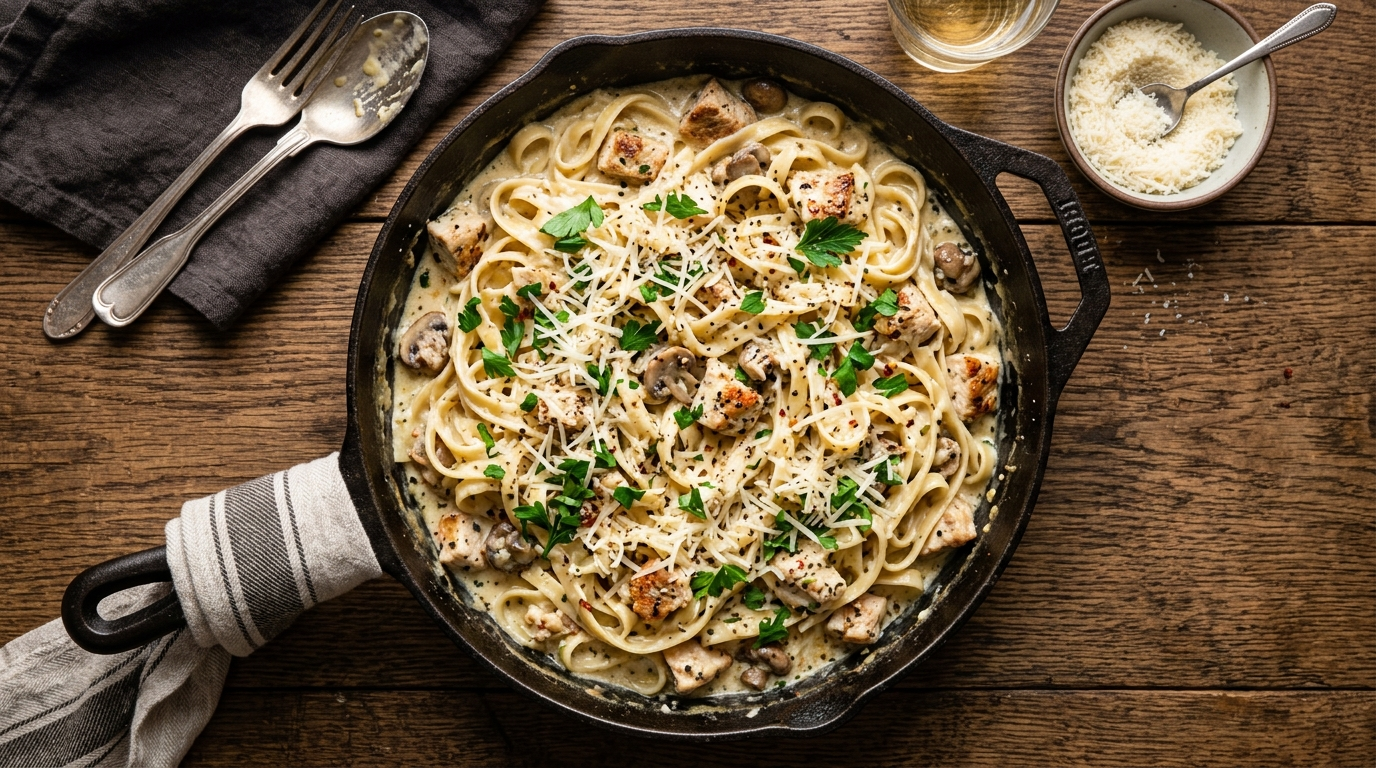
Creamy Chicken Alfredo Recipe — Ready in 30 Minutes
Why you’ll love this recipe
- Time: Done in 30 minutes start to finish — one pan for the sauce, one pot for the pasta.
- Ease: No complicated techniques; if you can stir and sauté, you can make this.
- Result: Silky, restaurant-quality cream sauce that coats every strand of pasta without feeling heavy.
These chicken alfredo recipes are so reliably creamy because the sauce is built directly from butter, garlic, and freshly grated parmesan — no shortcuts that cause it to break or taste flat.
Ingredients
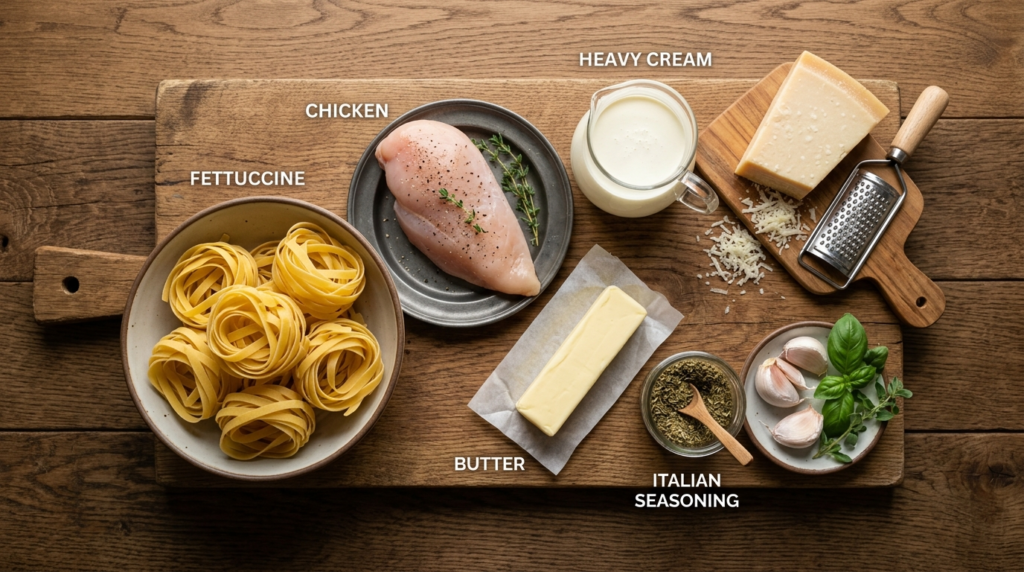
Main protein
- 700 g (1.5 lb) boneless, skinless chicken breasts — sliced into ½-inch strips
- 1 tbsp olive oil
- ½ tsp salt + ¼ tsp black pepper (for the chicken)
- Substitution: Boneless chicken thighs work well and stay even more tender — reduce cook time by 2 minutes.
Pasta
- 400 g (14 oz) fettuccine
- 1 tsp salt (for pasta water)
Alfredo sauce
- 60 g (4 tbsp) unsalted butter
- 4 garlic cloves, minced
- 360 ml (1½ cups) heavy cream (double cream)
- 120 g (1¼ cups) parmesan cheese, freshly grated — NOT pre-shredded
- ¼ tsp nutmeg, freshly grated
- Salt and black pepper to taste
- ½ cup pasta cooking water, reserved
- Substitution: For a lighter sauce, swap up to half the cream with full-fat evaporated milk — the sauce will be slightly thinner but still coats the pasta well.
Optional garnish
- Fresh flat-leaf parsley, chopped
- Extra parmesan, shaved
- Cracked black pepper
Step-by-step instructions
IMG 3: Step photo — golden seared chicken strips in cast-iron skillet. Alt: seared chicken for chicken alfredo recipe
1Bring a large pot of salted water to a boil. Use at least 4 litres of water and 1 tsp of salt. Start this first — it often takes 10–12 minutes and you can prepare everything else while you wait.
2Pat the chicken dry and season on both sides with salt and pepper. Moisture on the surface prevents browning — paper towels make a real difference here.
3Heat 1 tbsp olive oil in a large skillet over medium-high heat. Add the chicken strips in a single layer — don’t crowd the pan, or they’ll steam instead of sear. Cook for 4–5 minutes per side until golden and the internal temperature reaches 165°F (74°C). Transfer to a plate and cover loosely with foil.
4Cook the fettuccine according to package directions, usually 9–11 minutes, until al dente. Before draining, scoop out ½ cup of pasta water and set aside — this starchy water is the secret to adjusting your sauce consistency later.
5In the same skillet used for the chicken, melt the butter over medium heat. Add the minced garlic and cook for 60–90 seconds, stirring constantly, until fragrant but not browned. Browned garlic turns bitter — pull it off the heat for a moment if it’s cooking too fast.
6Pour in the heavy cream and bring to a gentle simmer (not a rolling boil) over medium heat. Stir in the nutmeg. Let it simmer for 3–4 minutes until slightly thickened — it should coat the back of a spoon.
7Remove the skillet from the heat completely, then add the parmesan in three batches, stirring after each addition until fully melted before adding the next. This step is important: residual heat off-flame melts the cheese smoothly without causing it to clump or turn grainy.
8Add the drained fettuccine directly into the sauce and toss to coat. If the sauce feels too thick, add reserved pasta water, 2 tbsp at a time, tossing as you go until the sauce clings silkily to every strand.
9Slice the rested chicken and arrange on top of the pasta. Season with salt and black pepper to taste. Finish with parsley and extra parmesan. Serve immediately — alfredo sauce sets quickly as it cools.
Pro tips & tricks
Use freshly grated parmesan: Pre-shredded parmesan contains anti-caking agents that prevent it from melting properly, leaving the sauce grainy and uneven. A block of Parmigiano-Reggiano and a box grater takes 2 minutes and makes a noticeable difference.
Take the pan fully off the heat before adding cheese: Adding parmesan to a simmering sauce causes the proteins to seize and curdle. Off-heat is not optional — it’s the single step most home cooks skip when the sauce breaks.
Don’t rinse the pasta: Rinsing removes the surface starch that helps the sauce adhere. Drain and immediately toss it into the warm sauce.
Rest the chicken before slicing: Letting the cooked chicken rest for 5 minutes before cutting keeps the juices inside. Slice too early and you’ll find the cutting board, not the pasta, gets all the flavor.
Storage tip: Alfredo sauce does not freeze well — the cream separates on thawing. Keep leftovers in the fridge and reheat gently with a splash of cream or water to revive the consistency.
Storage & meal prep
Fridge: 3 days in an airtight container. Store pasta and sauce together.
Freezer: Not recommended — cream-based sauces separate when frozen and thawed.
Reheating: The oven is too drying for pasta — the stovetop is better here. Add the leftovers to a pan over low heat with 2–3 tbsp of water or cream, stirring gently until warmed through and the sauce loosens again. The microwave works in a pinch (cover with a damp paper towel, heat in 45-second intervals, stir between) but the texture won’t be quite as good.
Meal prep tip: Cook and slice the chicken up to 2 days ahead and refrigerate separately. Make the sauce and cook the pasta fresh the day you’re eating — it only takes 15 minutes once the chicken is already done.
Frequently asked questions
How do I keep alfredo sauce from getting too thick?
Reserve ½ cup of pasta cooking water before you drain the fettuccine. Add it to the sauce one tablespoon at a time while tossing the pasta — the starch in the water loosens the sauce without diluting its flavour. Alfredo naturally thickens as it cools, so a slightly loose consistency in the pan is exactly right.
Why does my alfredo sauce turn out grainy?
The most common reason is adding the parmesan while the sauce is still simmering on the heat. Always take the pan completely off the burner first, then stir in the cheese in small batches. Using pre-shredded parmesan (which contains starch coatings) is the second most common cause — switch to freshly grated for a smooth, velvety result.
Can I use boneless chicken thighs instead of breasts?
Yes — thighs work well here and are actually more forgiving because they stay juicy even if slightly overcooked. Use the same method and cook until the internal temperature reaches 165°F (74°C), which usually takes 3–4 minutes per side rather than 4–5.
What pasta can I use if I don’t have fettuccine?
Linguine and tagliatelle are the closest alternatives — wide, flat noodles hold the cream sauce well. Penne and rigatoni also work because the sauce fills the tubes. Avoid thin pasta like angel hair, which gets lost in a heavy cream sauce.
Is chicken alfredo healthy?
A full serving contains approximately 650 calories, with 35 g of protein from the chicken and around 38 g of fat from the cream and butter. It’s a rich dish by nature, not an everyday light meal — though you can reduce the cream by a third and replace it with extra pasta water for a noticeably lighter result without sacrificing too much of the texture.